MM logo white 1
MM logo red
Image description is not available

How does an air purifier work in the home?

Thijs15 MARCH 2026
Smiling woman sits on bed with laptop and her dog in a bright room filled with plants, while a white air purifier stands quietly nearby.

Do you suffer from hay fever, asthma or a cat allergy, or do you want to get rid of unpleasant smells such as cooking odours and smoke? Then an air purifier can help reduce these symptoms and odours by filtering the air in your home. On this page, you can read exactly how an air purifier works, which components are important for the device and how many hours a day it can be on.

What exactly does an air purifier do?

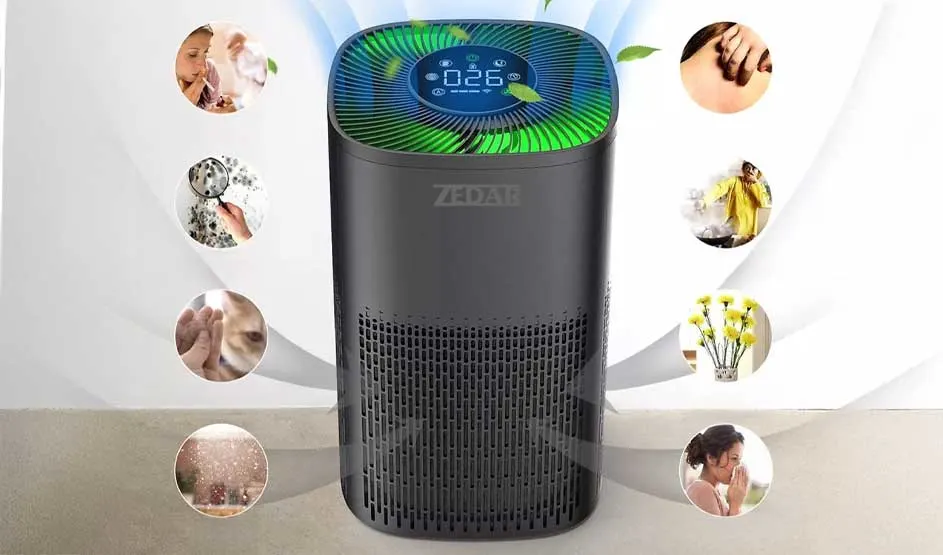
Black Zedar air purifier with glowing green top panel, surrounded by circles of people, flowers and dust, symbolising fresher, cleaner air.

An air purifier draws in the air in your room, filters it and then blows the clean air back into the space. Most models use a combination of a pre-filter, HEPA filter and carbon filter to remove particles (such as dust, pollen, dust mites and bacteria) and odours from the air. There are also air purifiers with an ioniser or UV‑C light, sometimes with an additional HEPA filter. In this way, an air purifier reduces the amount of allergens in the air, helps with allergies such as hay fever and dust mite allergy, and creates a cleaner, fresher indoor climate.

Why do you need an air purifier?
How does an air purifier work: every step explained

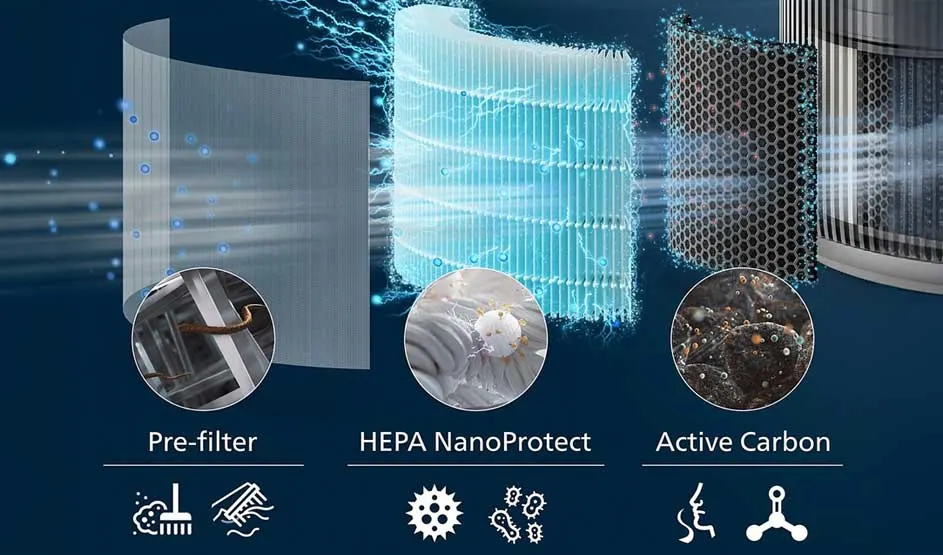
Diagram shows air flowing through three filter stages: pre-filter, HEPA NanoProtect and active carbon, with icons and detailed close-ups.

Exactly how an air purifier works depends on the different filtration technologies it uses. Some modern air purifiers combine several techniques and filters, while others focus on just one type of pollution, for example odours and fumes through adsorption. Effective air purifiers usually have a combination of a pre-filter, HEPA filter and carbon filter. Below, we explain what each filter in the air purifier does.

The different technologies in air purifiers
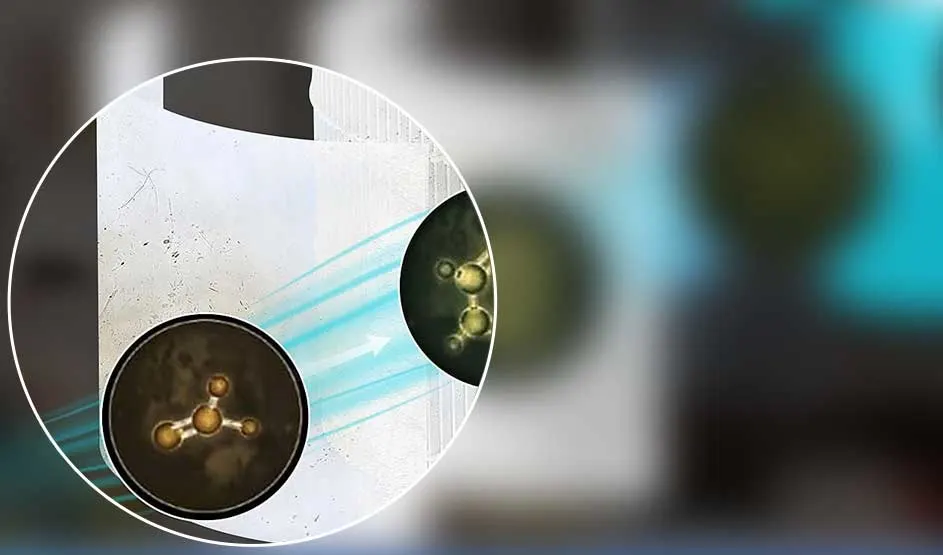
Close-up of an air filter with blue airflow; magnified circles show tiny molecules being captured and held within the layered material.

Pre-filter

A HEPA filter or carbon filter works best in combination with a pre-filter. A pre-filter stops larger dirt particles such as pet hair and dust clouds, so they don’t reach the fine dust filters. A pre-filter in an air purifier:

  • Captures larger particles, such as dust, hair and pet dander, fluff and other visible dirt.
  • Protects the finer filters (HEPA and carbon) from clogging quickly.
  • Extends the lifespan of the other filters by blocking coarse dirt in the first stage.

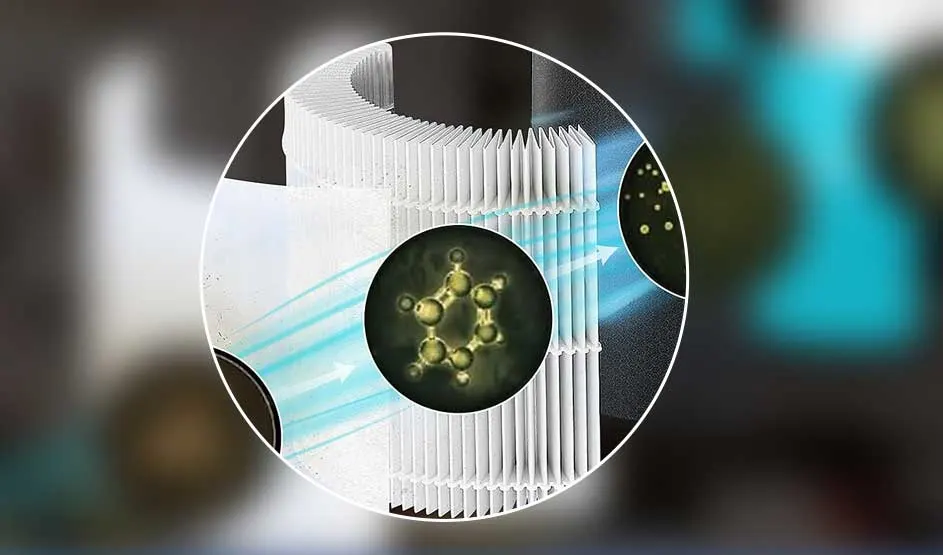
White layered air filter with blue stripes and circular inset showing yellow molecular structure on dark background

HEPA filter

In addition to a pre-filter, most modern air purifiers also have a HEPA filter to remove dust, pollen and other allergens (ultra-fine particles) from the air. A HEPA filter is often placed directly after the pre-filter. A HEPA filter in an air purifier:

  • Consists of a dense fibre network (often glass fibres) that air is drawn through: the particles get trapped in the fibres while the clean air passes through.
  • Filters very small particles from the air (such as fine dust, pollen, mould spores and certain bacteria).
  • Reduces the number of allergens in the air, which is particularly helpful for hay fever, dust mite allergies and sensitive airways.

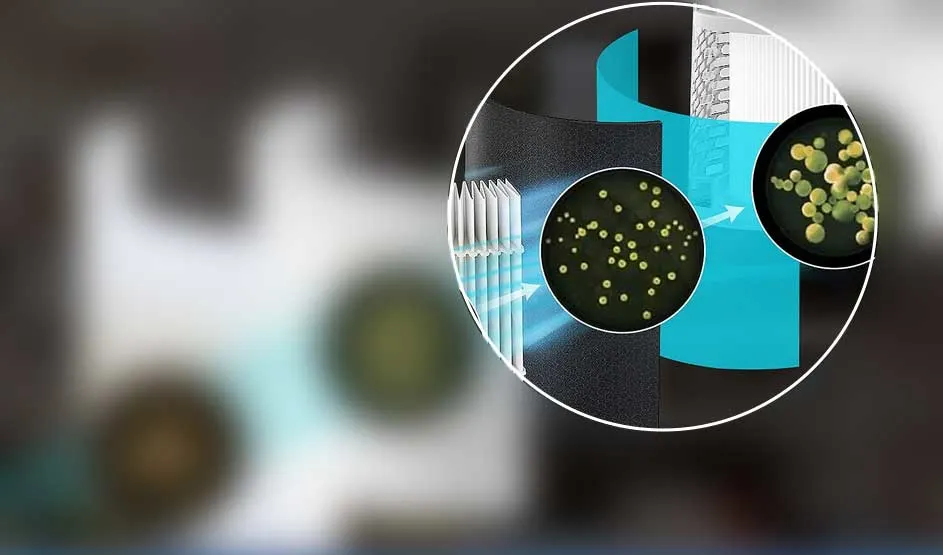
Diagram of layered air filters with blue airflow; enlarged circles show numerous yellow particles being captured and held in the media.

Activated carbon filter

Activated carbon filters help combat odours and fumes in your home so the air smells fresh again. Not every air purifier has a carbon filter but combined with a HEPA filter you get the most out of your air purifier. An activated carbon filter:

  • Contains activated carbon with a very large internal surface area (which provides strong adsorbing capacity).
  • Adsorbs gases and odour molecules, such as cooking smells, tobacco smoke, pet odours and volatile organic compounds (VOCs) from products like paint and glue.
  • Makes the air feel fresher by significantly reducing unpleasant odours.

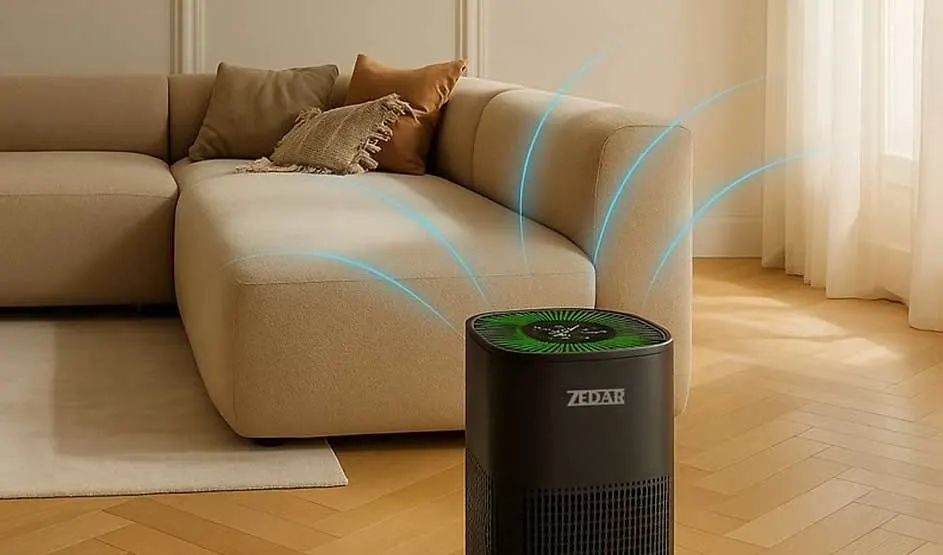
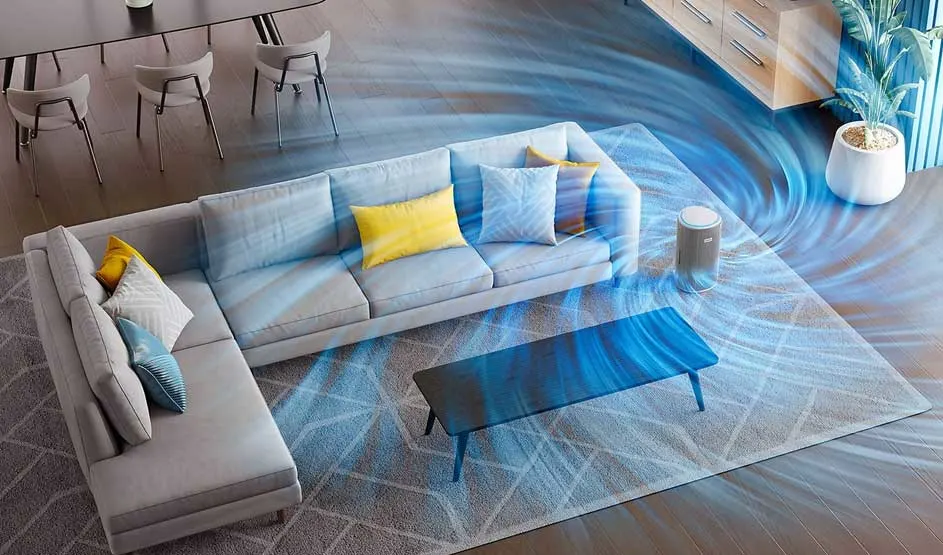
In a cosy living room, a black Zedar air purifier stands before a beige corner sofa, sending gentle blue arcs of air upward.

Blowing clean air back into the room

Once the air has passed through all the filters, only clean air remains. The fan in the air purifier blows the filtered air back into the room and the process is repeated. Polluted air is drawn in and filtered again, ensuring constant air circulation.

How long should you run an air purifier for?

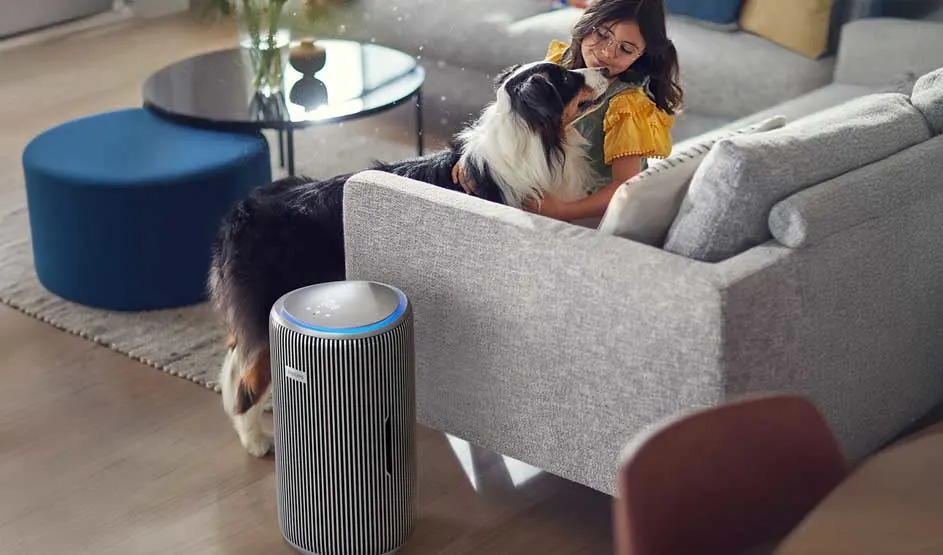
Girl on a grey sofa cuddles her large dog in a bright living room, as a striped air purifier stands quietly beside the settee.

There is no single ideal length of time to keep your air purifier on. How long it should run depends on the size of your room, the level of pollution and your personal preference. In a less polluted room (without pets and not in a dusty or dirty environment), 8 to 12 hours a day is often enough. In a large or heavily polluted space (with lots of pets, smoke or on a busy street), running it 24/7 on a low setting is usually the most effective. In a small or medium-sized room, you can also switch it on only when you are there, for example for a few hours every evening, depending on what you find acceptable in terms of noise, energy consumption and air quality. With a smart air purifier, you can easily switch it on or off remotely, so it only runs when you want it to.

What is a smart air purifier?

Our advice on how an air purifier works

Lichte woonkamer met grote grijze hoekbank en kleurrijke kussens; een luchtreiniger verspreidt blauwe luchtstromen rond tapijt en tafel.

An air purifier at home can help reduce symptoms of a dog or cat allergy, hay fever, dust mite allergy or asthma*. With a pre-filter, HEPA filter and carbon filter, it draws large and small particles and odours out of the air, so you can breathe cleaner air. How long you let the air purifier run depends on your situation, but for the most effective purification, it’s best to keep it on 24/7. It’s also important to keep your home clean, as some of the dirt will settle on surfaces and floors. An air purifier is not a substitute for medication but serves as an additional aid to improve air quality.

*Results vary from person to person and depend on how often and how long the device is used, which filters are used and whether they are replaced on time.

View the best air purifiers

FAQ

These articles might be interesting